


 LE MAGAZINE
How do you surf a wave in a wing foil?

Do you already know how to wing foil and want to take it to the next level? Do you dream of surfing waves by flying on the water, without the board ever touching the water? You’ve come to the right place! In this article, we will explain how to surf a wave in wing foil, giving you advice on the choice of the spot, the position of the wing, the trajectory to follow and the maneuvers to perform. Whether you are a beginner or an experienced athlete, here you will find all the information you need to enjoy this exciting sport to the fullest.
Prerequisites to surf a wave in wing foil
What level of practice to start surfing?
- Know how to sail correctly : you have to master the basic principles of wing foiling, speed and direction control, changing tacks, etc. It is also necessary to know the rules of safety and priority on the water.
- Know how to master jibes : It is best to know how to do them without losing control or touching the water with the board before trying to surf. Here you will find our illustrated guide that explains how to make a wingfoil jibe, step by step.
If you have these skills, you’re ready to ride a wave in a wing foil! Otherwise, we advise you to practice on a flat and calm body of water before venturing into the waves.
“With a foil like the 1350 Lift, you can surf endlessly on the slightest undulation of more than 20cm. It’s the best way to turn a crappy spot into a dream spot!”
Choice of spot for wing foil
- The direction and strength of the wind : it is necessary to choose a side shore wind (parallel to the beach) or side on shore (slightly oriented towards the beach), which allows you to sail easily and return to the shore in case of problems. It is important to avoid the offshore wind (which blows out to sea), which makes the return journey difficult and dangerous. The force of the wind should be enough to inflate the wing and make the foil take off, but not so strong that it is not unbalanced. In general, a wind between 10 and 25 knots is recommended.
- The size and shape of the waves : you need to choose waves that are adapted to your level and equipment. To start, it is better to opt for small soft and regular waves, which allow you to familiarize yourself with gliding and take-off. To progress, you can head for deeper and faster waves, which offer more sensations and possibilities for maneuvering. Waves that are too big or too breaking should be avoided, as they can be dangerous. You can also easily start in the clapôt and make your first surfs.
- The space available : you have to make sure you have enough space to navigate without being hindered or hindered by other practitioners. The rules of priority must be respected.
How do you surf a wave in a wing foil?
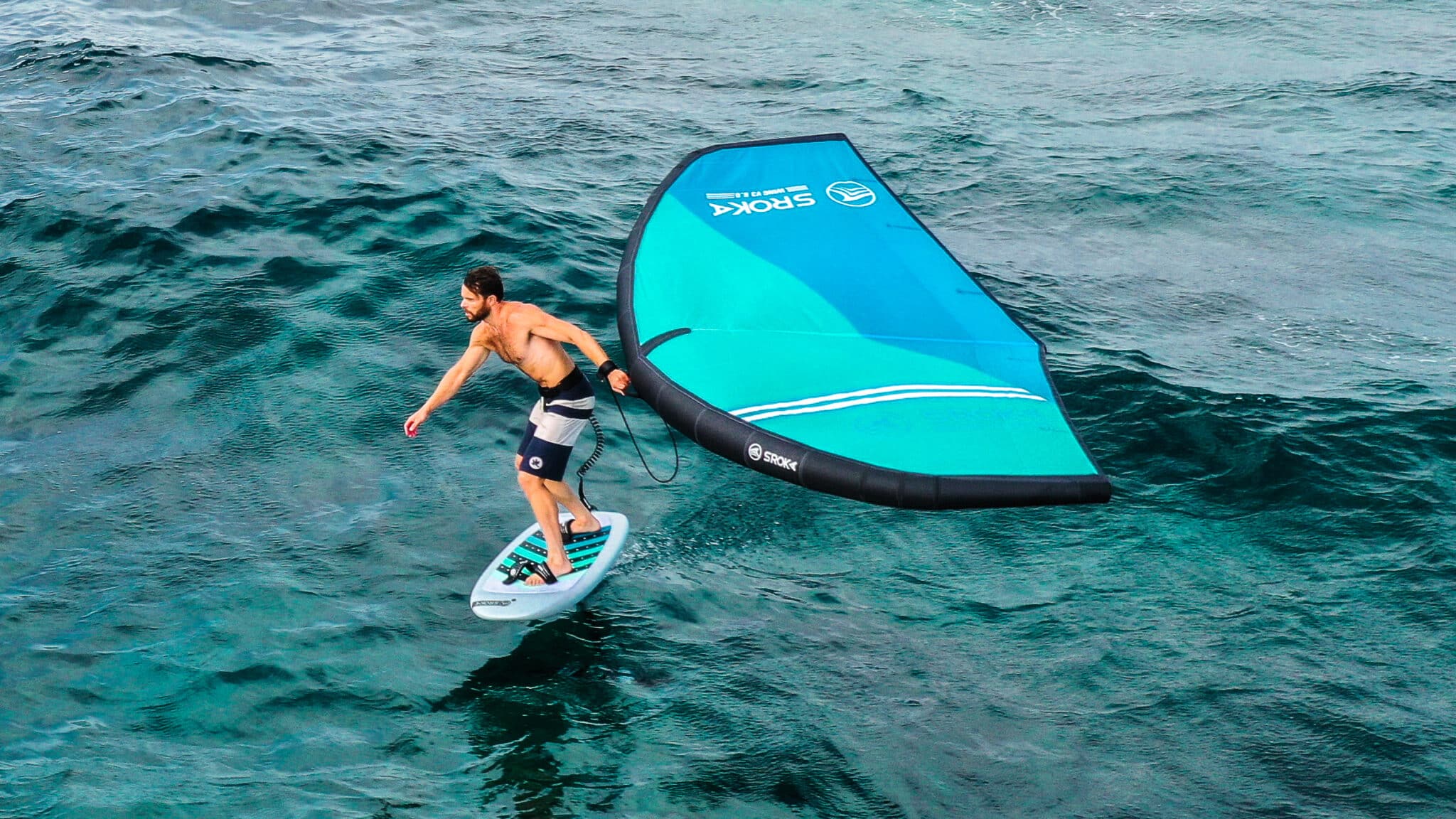
- Spot a wave forming and turn around in front of it, or at least sail in the same direction as the wave. You have to stand at a sufficient distance to have time to prepare and position yourself.
- Adapt your speed to the speed of the wave to get as close as possible. The goal is to be on it, without being too early or too late. Use the wing to speed up or slow down, pulling or releasing the handles or boom.
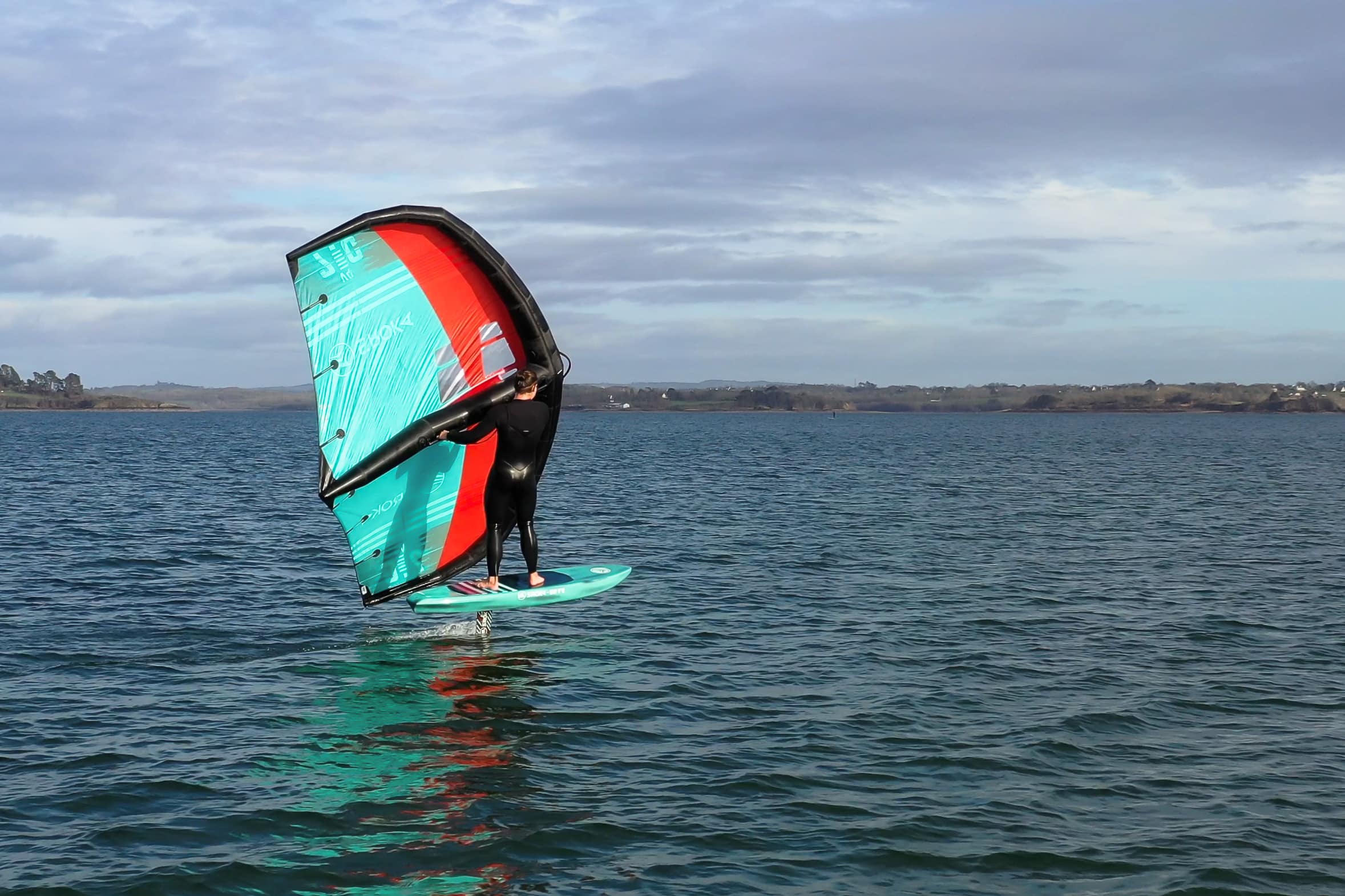
- Once on the wave, put your wing in a neutral position by taking it by the handle of the leading edge. This allows you to be freer and to really surf. Keep the wing above your head or to the side, depending on the wind.
- Adjust your trajectory according to the shape and movement of the wave. Angle the board with your feet and chest, keeping your knees bent and your gaze towards the horizon. You can adapt your speed and direction with the wing, moving it slightly and flexibly.
- If you go faster than the wave, you have to go in the direction of the wave at an angle, so as not to overtake it or lose it. If you go slower than the wave, you have to stay perpendicular to the wave, so you don’t get caught or fall.
What equipment to surf in wingfoil?
The “Classic” range
Classic foils have a medium ratio appearance. They are easy to handle and offer good stability and maneuverability. They are ideal for beginners or riders looking to have fun in the waves or make transitions. They are available in several sizes, ranging from 1250 cm2 to 2000 cm. The 1250 is designed for experienced riders or beginners with a very light build (-50 kg).
The “High Aspect” range
High-aspect foils have a high ratio aspect, i.e. a larger span compared to the rope. They are more effective in surfing because they glide longer. They are also more suitable for light winds or soft waves. They are available in several sizes, ranging from 950 cm2 to 2000 cm2.
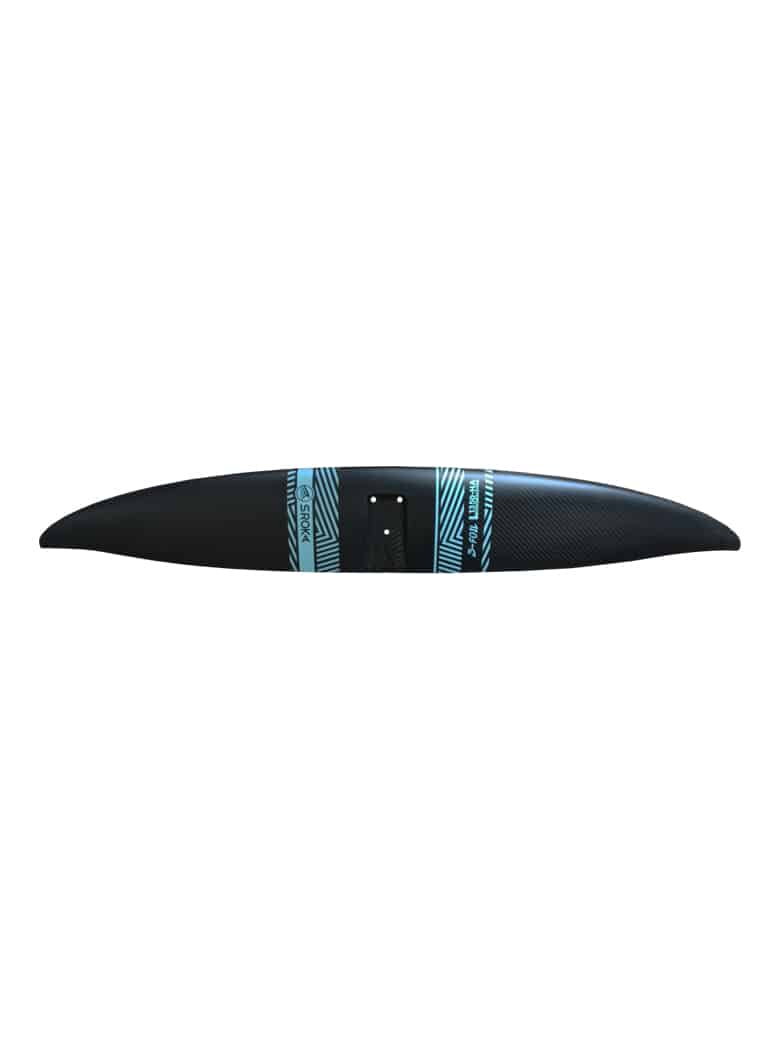
| Front Wing | Surfing Behavior |
| HA 1350 | Hovers infinitely over the slightest ripple. Perfect for chop, small swells and waves under 50 cm. Ultra-efficient pumping. It’s the ultimate kite for wing surfing and foil fun in small conditions. 100% compatible with surf foil. |
| HA 1190 Lift | Hovers for a very long time and wears a lot. Perfect for chop, small swell and waves under 70cm. Very efficient pumping. 100% compatible with surf foil. |
| HA 1190 Speed | Glides for a very long time, picks up speed than the 1190 Lift but requires a few more centimeters of wave to plan as much, due to its faster and less load-bearing Speed profile. Perfect for small, medium swells and waves of less than one metre. Very effective pumping when you have a bit of speed. It will be more difficult to restart it in pumping if it loses speed, compared to the Lift version which will be able to start again very easily at low revs. 100% compatible with surf foil. |
| HA 950 | Perfect in swells over 50cm for effortless gliding. You pick up a lot of speed with a lot of control. |
| Classic 2000 | Very powerful, it is the wing that offers the most lift. A big guy will be able to make his first surfs in waves or swells between 20 and 60 cm. |
| Classic 1750 | It’s the perfect wing to start in Wing. It allows average riders to learn how to wingfoil in the best conditions and to make their first surfs with ease. |
| Classic 1500 | It is the perfect wing to start in Wing when you have a small size (-60kg). It allows light riders to learn how to wingfoil in the best conditions and to make their first surfs with ease. 100% compatible with surf foil for tall riders. |
| Classic 1250 | It is the perfect kite to carve and exploit the maximum of waves from 30 to 80cm for an average size (80kg). 100% compatible with surf foil. |
If you still have questions about this, or for any other request, please do not hesitate to contact us !
Article you may be interested in
New Ultra Light Wind and Down Wind Board: SROKA’s DW
New Ultra Light Wind and Down Wind Board: SROKA’s DW
New board from ultra Light Wind and the Down Wind, the DW by Sroka. Or the board that will make you forget the nickname of tea bag, …
•
April 22, 2024
The Differences Between a Carbon vs Aluminum Paddle Paddle
The Differences Between a Carbon vs Aluminum Paddle Paddle
In general, we can draw a parallel between the paddle and the car in order to better understand the differences between materials and variations…
•
April 17, 2024
The best stand up paddle spots in France
The best stand up paddle spots in France
For more than 10 years now, inflatable stand up paddle has continued to develop and spread on French beaches. Beyond…
•
April 11, 2024

Selection of inflatable paddle boards: our 2024 comparison
Selection of inflatable paddle boards: our 2024 comparison
Are you looking for an inflatable paddle board for the summer to sail at sea or in lakes? The inflatable paddle board really has a lot of advantages…